Two Wheels One Collision and Suddenly a Hundred Questions
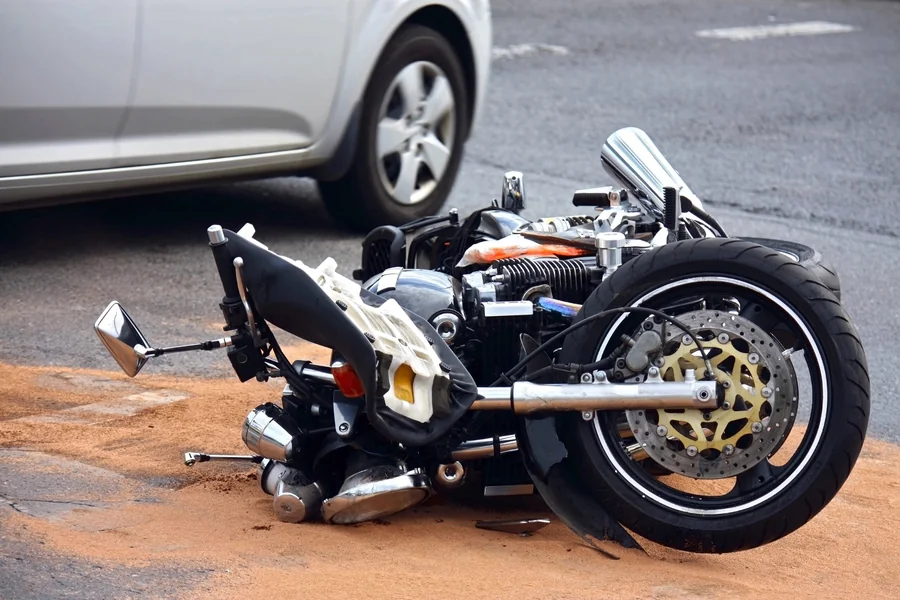
A motorcycle accident happens within a couple of seconds, yet the ambiguity that ensues has a tendency to drag on. In a matter of moments a person can be riding the normal way yet when asked questions about injuries, insurance, evidence and what happens next after the event in the aftermath, he or she has no idea of collision .
That change occurs quickly, sometimes even prior to the time when a person concerned can even digest what has just taken place. In contrast to smaller life accidents, a motorcycle accident often affects almost every aspect of life simultaneously, both physical restoration and monetary stress to mere disorientation and confusion on how to proceed.
That confusion is exactly where most motorcycle accident questions originate, since riders and their families often find themselves navigating unfamiliar territory during a moment when clear thinking already feels genuinely difficult to manage.
Start With Health Before Sorting Out the Case
During the immediate aftermath of collision, the consideration of medical attention is more significant. Not all injuries show immediately and adrenaline may cover pain which will be revealed only hours or days after that very blow took place.
It is not merely a practical recommendation to prioritize health over paperwork, but it is a perceptual issue of sequencing in reality. Fault determinations and insurance questions may be postponed. Physical injuries (particularly, the ones, which are not immediately visible) simply cannot afford to be put off without further complications in the future.
It does not imply that other issues are forgotten completely at this stage. It just implies that they put back in the background as the more pressing need, supporting physical wellbeing, receives the kind of attention it truly deserves, first, before anything else proceeds.
What Happened at the Scene Won’t Stay There Forever
Scene information is always easy to forget due to the memory lapses and even due to weather and just by the passage of time. The information in photographs, video footage and witness descriptions obtained shortly after the event is usually much harder to retrieve once a significant delay has elapsed.
Police reports include official observations which are not a complete picture of what has really happened. The tendency of vehicle damage, the condition of the road can all change or be completely lost in days unless somebody does anything to preserve it.
That’s why evidence preservation matters so much in the early aftermath. Information that feels obvious and easy to recall immediately after a collision can become surprisingly difficult to reconstruct accurately once time, memory, and changing conditions start working against it.
Whose Insurance Pays Isn’t Always Obvious
It can be even more complex than one may imagine since it is sometimes difficult to determine which insurance policy is applicable. The area of liability will rely on the situation of the surrounding collision, and various policies or parties may have a possible impact on the final resolution of a claim.
Even the coverage available may differ significantly, based on the policies in place and what actually occurred. Particular motorcycle cases Motorcycle claims can occasionally be more complex than typical vehicle crashes, as there are variations in the insuring and assessment of the typical motorcycle.
That is why insurance questions are among the most popular issues that arise after a motorcycle crash. The riders can be easily misled by thinking that the process should be less challenging than it turns out to be since coverage and responsibility dictation is much more complex than thought.
The Questions Change as the Case Develops
Immediately following a collision the issue of concern is most likely to focus on injuries, evidence, and first point insurance contact. Over time, however, the questions evolve and are directed towards progress in treatment, absenceeeism, repair or replacement of motorcycles, and the real course of negotiations with insurers.
It can be logically explained by the development of a case that does happen. Initial priorities are on stabilization and documentation but subsequent phases are on determining the extent of losses as well as the processes involved in discussing amicable solution to the issues of all the involved persons.
Acknowledging that change will assist in realistic expectations. It is quite natural that the questions that one is likely to have right after an accident will always appear quite different in comparison to the ones that really matter a few weeks or months later when the situation will be developed further.
Conclusion
The consequences following a motorcycle accident hardly end up in a unanimous decision taken at the scene. It proceeds slowly, running through medical care, fact finding, insurance deliberations and negotiation, with new inquiries arising naturally at every point of the path along.
Realizing that process as a series but not an event is a way of making an otherwise stressful situation seem a little bit more manageable. Every stage has its priorities and correspondingly prioritizing them in that sequence is likely to give superior results compared to attempts to jump.
The uncertainty that a collision generates can not be completely eradicated, but knowing that the process of asking questions is not instantaneous, and that throughout the process, questions are bound to change gradually, can help in reducing the uncertainty to a much more manageable level.