How to Choose Wedding-Day Accessories That Complement Your Dress
Why Accessory Planning Matters
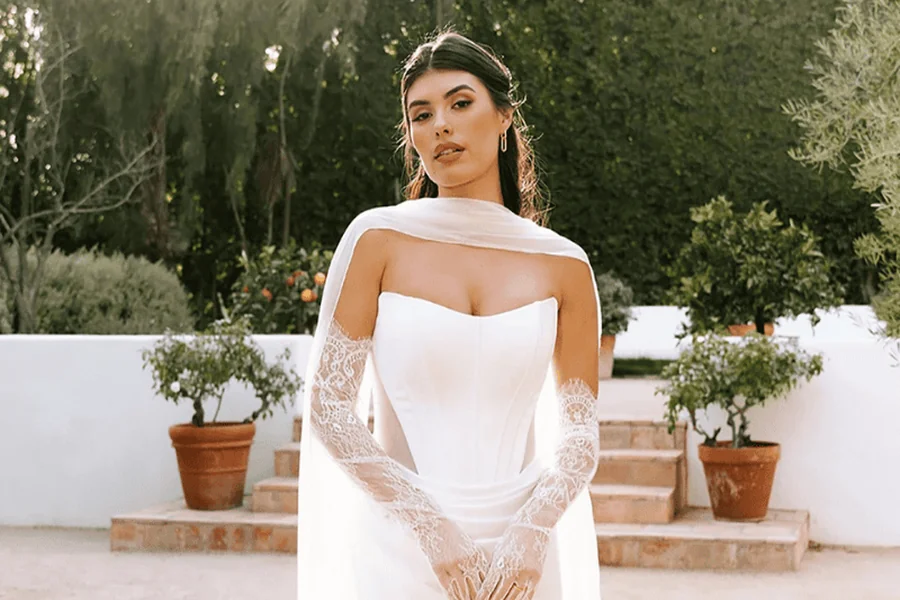
The best wedding accessories support the overall look instead of competing with the dress, the hairstyle, or the wearer’s comfort. There’s more to choosing jewelry than simply picking what looks pretty — neckline shape, fabric texture, hairstyle, metal sensitivity, proportion, and the practical demands of a long event day all come into play. Browsing a collection of bridal earrings can be a helpful starting point for comparing silhouettes like studs, drops, hoops, and chandelier styles before figuring out how any one piece fits with the rest of the outfit. This article offers general guidance rather than an endorsement of any particular retailer or designer.
Start With the Dress’s Visual Structure
Assess the Neckline
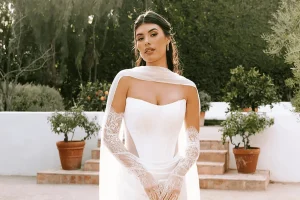
This frequently depends on the neckline whereby a necklace, earrings, or both will bear the visual load. V-necks are well balanced by long pendants or earrings repeating the same vertical line and high necklines are sometimes best match by earrings leaving most of the work to do it. Strapless and sweetheart cuts can either be done with a restrained necklace or an impactful earring works equally well, and overloaded bodices often require simpler accessories so they do not seem to be overdone. These are style principles and not strict rules, but; it is still more about personal taste and the proportions of the dress.
Consider Fabric and Embellishment
Reflective satin, thin lace, beading, and embroidery are each in their own way, jewelry. Using the same visual element, such as pearls, crystals, a certain metallic shade or a flowered pattern, is likely to render an outfit purposeful as opposed to casual. There should be a tendency to avoid excessive competing points of focus, as in this case too many points tend to put a look down the road between elegant and disordered.
Coordinate Accessories With the Hairstyle
Match the Earring Shape to Hair Placement
Both updos and other pulled-back types of hairstyles reveal the ears and neck line, and so designable space is provided, but loose waves may also partially re-veal longer earrings or even get caught in them. The hairstyles are short, which exposes earrings in their entirety, and veils, hair vines, or combs are the additional elements that can be thought through. It never hurts to look and see if there is any hook, post, or decorative back that will snatch in the hair.
Balance Hair Accessories and Jewelry
With such an ornate hairstyle and jewelry as well the choice of just one dominant statement item would help to ensure that things do not fight against each other. Doubling up of a material or motif between the hair piece and earrings can bond the look without creating an overly matched look. The elaborate hairstyle also tends to be paired with smaller earrings, whereas a simpler one should be left to move or shimmer around the face.
Quick styling check:
– Is the face still the visual focus?
– Can the earrings be seen from the front and side?
– Will the hairstyle hide, catch, or pull on them?
– Do the accessories compete with the veil or headpiece?
Choose Materials With Comfort and Skin Sensitivity in Mind
Metals like nickel and cobalt are typically associated with jewelry reactions and may be present in alloys in their not-so-electrolyte forms. The symptoms can be itching, redness, irritation, or blistering at any place where there is contact with the metal, especially at the earlobes. It is much better to verify material information with a seller or jeweler since such a dubious label as hypoallergenic is hardly to be trusted. Surgical quality stainless steel, titanium or solid gold can be discussed as safer choices to use with delicate skin, but the response to it varies according to an individual.
It is worth the test accessories in advance of the wedding. Alter-Ego: Wear the precise pair – posts, backs, coatings, adhesives, the whole lot, and have a brief trial of it first, supposing that there is no known severe allergy already in action. Discontinue their use when irritation appears, and consult a medical practitioner when the symptoms continue. When the skin sensitivity is of concern, check the actual metal composition, and not based on assumptions.
Prioritize Weight, Fit, and All-Day Wearability
Even the most notable accessory will become uncomfortable after a few hours. Weight of the earring, the post thickness, the design of the back and the balance altogether are all considerations of comfort and lighter options are worth consideration to an individual who does not wear earrings regularly. Wear items during activities, when sitting, hugging, and taking photos, – comfort is known to show itself only when you are already wearing the jewelry and not just when you are trying on.
The effects of heat, humidity, wind, dancing, and long reception hours have the potential to strain the performance of jewelry. Hanging items and hair jewels in especially decrease in position during movement, making it clever to have a mini repair set with backup backs and a ziploc bag.
Consider the example of a person who firstly chooses earrings that are too big to take dramatic pictures only to realize that a lighter pattern is much more comfortable to wear, not to mention that it captures the same photos. It is not to be assumed that comfort will be provided before the wedding day.
Build a Cohesive Metal and Color Palette
Yellow gold, white metals, rose gold and mixed-metal items all had varying readings with the details of a dress. The way jewelry is coordinated with shoes, hair accessories or embroidery does not require a precise match: subtle consistency tends to be better than uniformity. Pearls, clear stones, colored stones and matte finishes all provide a level of visual emphasis and thus it is best to test the pieces in the same light that you will see at the ceremony and the reception, from what you see under the store lights.
Use a Simple Selection Process
- Identify the dress’s neckline and embellishment level.
- Decide whether the focal point will be the face, neckline, hair, or overall silhouette.
- Assess hairstyle, veil, and hairpiece compatibility.
- Confirm material, fit, and comfort.
- Test the complete look in photographs and natural movement.
A visual priority needs to be shared by the dress, hairstyle, and accessories and not rival each other. Capturing shots of the entire outfit in the front, side and sitting pose, would usually show discrepancies which would not otherwise be seen in a mirror.
Practical Mistakes to Avoid
According to the author, some of the most common pitfalls are waiting until the last fitting to test jewelry, selecting the pieces by their appearance in the stores, not paying attention to metal composition, having pieces that get tangled with hair or a veil, combining all the incompatible metals or textures and leaving the spare backs or repair materials behind.
Final Thoughts
Begin with the dress, match with the hairstyle, cogitate about material and comfort and put the entire outfit to test, before the big day comes. Accessory options must narrow down to individual preference and necessity and not what is being worn through fad. Assembling a full trial is best done way ahead of time – and photographed at many angles – there is time to give it the minor adjustments that make it all, and the comfort and the style can still be worked out.