
Nursery School: Building Strong Foundations Through Everyday Experiences
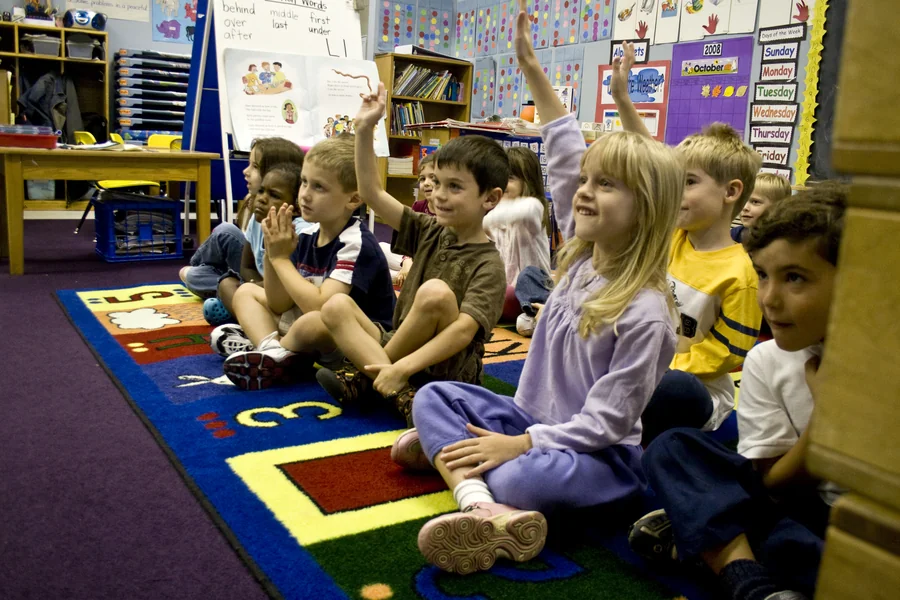
Early childhood education is not simply about teaching children letters and numbers before formal schooling begins. A thoughtfully designed nursery school helps children develop socially, emotionally, physically, creatively, and intellectually through experiences suited to their age.
Even the simplest tasks may be used as potent learning opportunities at this stage. Crafting a tower helps to develop problem solving skills, sharing materials fosters teamwork and listening to a story enhances language and imagination.
Why Nursery Education Matters
Young children are children of inquisitive nature. They ask questions all the time, they experiment with things, emulate the adults and explore how things are done.
The interest that this curiosity creates can be directed in a nursery school towards valuable purposes without causing learning to become coerced.
Instead of depending solely on formal teaching, early education can connect with the interest in exploring the concepts by means of play and real experiences.
Language Develops Through Conversation
The learning of languages occurs during the day.
Children also build vocabulary as teachers talk about pictures, ask questions, tell stories, sing and make conversations.
Stories Build More Than Vocabulary
Storytelling enables children to have an idea of sequence, characters, emotions, cause and effect and imagination.
Children can be also encouraged in a nursery school to make predictions on what happens next or tell their favorite part of a story.
These short discussions reinforce the understanding and trust in communication.
Early Mathematics Can Be Hands-On
Children experience mathematical concepts in an intuitive way.
They observe the tallest tower, count items, recognize patterns or compare numbers, and sort materials by shape or size.
A nursery school does not have to rely solely on worksheets and may engage the children in physical objects and fun challenges to simplify mathematical concepts.
Practical learning enables children to experience and apply concepts as opposed to memorizing information.
Social Skills Grow Through Group Experiences
Learning how to interact with other children takes practice.
Children gradually learn to wait for turns, share resources, communicate preferences, cooperate, and respond when disagreements occur.
Families exploring nursery learning in Sholinganallur can observe how educators support positive relationships between children.
Emotional Development Is Equally Important
Young children are known to have high emotions, which they may not always have the vocutures or discipline to control.
A nursery school will assist them to recognize emotions and express what they require.
Frustration may set children on their path by teachers rather than leave emotional regulation to spontaneously emerge.
Creative Activities Encourage Original Thinking
Children are given a chance to make something and not necessarily presented with what the end product ought to be like.
Children can use drawing, painting, music, construction, telling stories, moving and creating imaginary plays to express ideas in various ways.
A nursery school with the appreciation of creativity provides children with the chance to explore and to choose.
Persistence may also be developed through these activities as children will also learn to adjust an idea when something fails to happen as supposed.
Independence Begins With Everyday Tasks
Children like to feel competent.
Independence can be cultivated through small duties like the organization of materials, packing up and washing hands, making choices about activities and helping clean a classroom.
Adults need to should children to have a go.
Being helpful may be counterproductive to providing the possibility of learning.
A good nursery school provides kids with a necessary window to undertake achievable tasks and offer assistance when it is really necessary.
This practice can boost self-belief and perseverance.
Physical Development Needs Daily Attention
Young children are meant to get about.
Gross motor skills are developed in running, jumping, balancing, dancing, climbing and outdoor games. Small objects such as puzzles, drawing, threading, construction, and manipulating help develop fine motor coordination.
Physical development should consist of both kinds of physical development in a balanced nursery school routine.
Predictable Routines Create Security
Kids usually feel safe when they are aware of what to expect.
Unpredictability can be narrowed down to regular activities and routines around arrival, activities, mealtime, movement, stories, and departure.
Nursery school routines must be flexible though, to meet the needs of the kids and significant moments of exploration.
Conclusion
A nursery school is more than just making sure that a child is prepared to move up to the next stage of education. It provides an atmosphere in which children learn how to dialogue, collaborate, resolve issues, express themselves, and handle feelings and grow more self-reliant.
The early learning, by connecting the character of the caring relationships with the tales, activities, imaginational and mobility, and exploration and age unique challenges, will help the child to mature with the high development levels and, in the process, discover something significant: learning can be playful.







