
The Most Accurate Wedding Vendor Checklist for Easy Planning
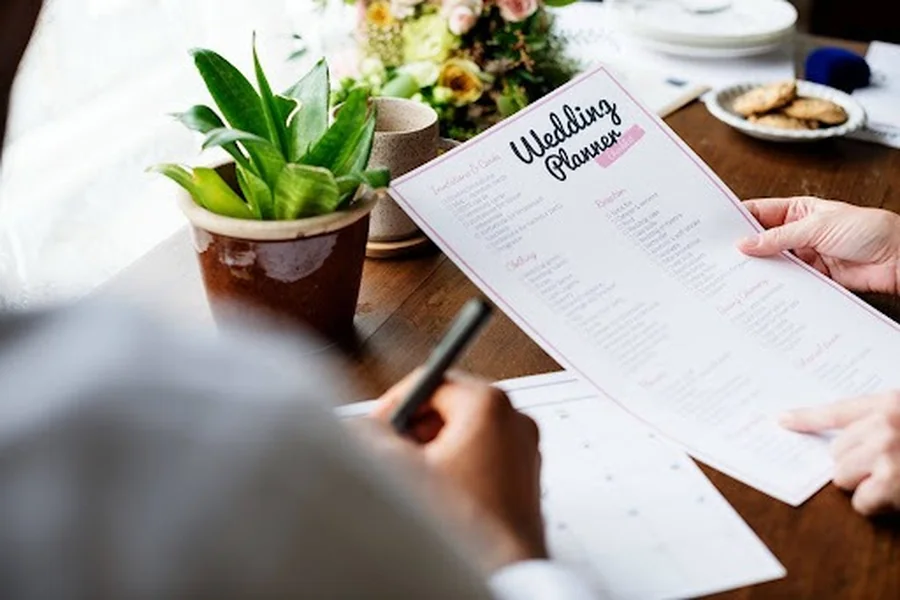
Planning a wedding often begins with a short list of vendors. Couples usually start with the venue, photographer, caterer and decorator, expecting the rest to fall into place along the way. In practice, the wedding vendor listing can become much longer.
A multi-day wedding may involve separate teams for different ceremonies, transportation, guest accommodation, entertainment, styling, beauty services and technical production. And for destination weddings, there is an added challenge in coordinating with guests, local suppliers, and travel arrangements. For multicultural weddings, there are specialists who have knowledge of specific customs, religious services, and family expectations.
That’s why a helpful wedding vendor checklist shouldn’t just inform couples who to hire. It should assist them in realising which services they actually require, when to book them, and how every vendor fits into the broader wedding plan.
What should be included in a wedding vendor checklist?
There is no single vendor listing that suits every wedding. A small local celebration may need only a handful of professionals, while a large destination wedding may involve several teams working across multiple days.
A practical starting point is to consider the following categories:
| Vendor | What to consider |
|---|---|
| Venue | Ceremony and reception spaces, restrictions, accommodation and facilities |
| Wedding planner or coordinator | Planning scope, coordination responsibilities and event coverage |
| Photographer | Photography style, coverage hours and final deliverables |
| Videographer | Coverage, editing style and delivery format |
| Caterer | Menu, dietary requirements, service style and staffing |
| Florist and decorator | Floral arrangements, décor, setup and breakdown |
| Entertainment | DJ, live music, performers, equipment and event flow |
| Officiant | Religious, cultural or legal ceremony requirements |
| Hair and makeup team | Number of people, timing and location |
| Cake or dessert vendor | Design, delivery and serving arrangements |
| Rental company | Furniture, linens, tableware, lighting and other requirements |
| Transportation | Couple, family, guests, airport transfers and event transfers |
| Stationery and signage | Invitations, menus, programs, seating plans and venue signage |
Depending on the wedding, couples may also need a hospitality team, security, childcare, technical production, photo booth services or travel assistance.
The important point is that not every couple needs every vendor. The checklist should reflect the wedding being planned rather than becoming a long list of services that happen to be available.
Which wedding vendors should you book first?
As soon as couples can realize the choices that would influence all of them, the booking sequence eases.
The date and location are usually the initial significant engagements. Thereafter, most of the couples would focus on a wedding planner/ Coordinator, photographer, caterer, videographer, decorator and entertainment crew. The vendors that have lower availability might have to be contacted earlier on especially on the popular days.
The question is not, as a matter of fact, with the boy-next-door, Who shall we book to-first? Its question is, What will we do next; what are some other plans we have to make?
By way of example, the location might be limited in terms of decoration, dining or music. A reception venue can also ask that the couples use suppliers who are approved. Likewise the guesting will determine the catering, furniture, transport and can determine how much photography should be involved.
The choice of one vendor without thinking of these connections can bring about changes that are not necessary in the future.
What should you check before hiring a wedding vendor?
While a great portfolio can draw attention, it does not reveal all the information about a vendor.
Couples need to have a clear idea of what they are committing to prior to confirming a service. It helps to record:
- Availability on the wedding date
- Services included in the quoted scope
- The total cost and schedule of payment.
- Deposit requirements
- Contract terms
- Cancellation and postponement policies
- Setup and breakdown responsibilities
- Additional or overtime charges
- Primary contact details
- Expected arrival and departure times
- Final confirmation deadlines
Knowing how a vendor communicates is also a key element.
A photographer could be such a good photographer and he has little time to devote to meetings. A decorator might be creative, but could take several weeks to complete designs. A caterer might have a great menu, but have certain requirements for access to the venue and in the kitchen.
Such information can be considered trivial when comparing suppliers. They are significant when a number of teams are collaborating.
Why vendor coordination matters
Selection of good vendors is not all that planning does. They must work off the same information as well.
Look at a very simple example. Makeup and Hair is more time consuming than anticipated. The portraits of the couple are postponed and this postpones transportation to the ceremony. This ritual thus continues later than scheduled, and there is a lack of time to take pictures before the celebration.
A single delay is capable of impacting multiple vendors.
It is especially found at destination and multi-day weddings, whereby various teams could come in at various times and operate in multiple locations. A planner might need to liaise with suppliers as well as dealing with the changes brought about by the couple family members and venue.
This is why a wedding vendor checklist must one day come into existence as a working document of responsibilities, as opposed to it being just a wedding vendor list of names and phone numbers.
The vendors must have well-defined roles, agreed working schedule, and relevant contract details and record of major decisions.
The problem with scattered wedding information
Some couples continue to organize their wedding by using a mix of spreadsheets, email replies, and documents and messaging groups. These tools are not bad in and of themselves. The challenge starts at the point of information modifications and various individuals proceed to work with previous versions.
A guest can be assigned to pick up time and the transportation team to pick up time. A decorator can be using a previous floor plan. A change can be approved by a family member without the knowledge of a planner.
This type of fragmentation is decreased using digital planning tools. Platforms like AyeDu can be seen as a manifestation of this tendency as they streamline areas like vendor coordination, timelines, budgets and guest management into a connected planning experience.
Technology must however enable the individuals handling the wedding and not to take their place. A computer based platform can maintain things in an organised state, yet a planner also applies judgement, experience, cultural awareness and coping with the unexpected.
Your vendor checklist should reflect your wedding
The longest lists of wedding vendors may not necessarily give the most accurate listings. It is they who are in line with real demands of the celebration.
It may be necessary to engage various ceremony professionals in a multicultural wedding. A destination wedding might require airport transportation, accommodation organization and suppliers. An Indian multi-day wedding can have various functions, locations, and families and religious practices.
The invitations list is important as well. Weddings that involve international guests can demand more comprehensive information on traveling as well as hospitality services as compared to a local wedding.
Before adding another vendor, ask three simple questions:
- What responsibility does this vendor need to handle?
- How does that responsibility connect with other parts of the wedding?
- Who needs to have access to the information and decisions involved?
These questions can prevent unnecessary duplication and make the planning process much clearer.
A good vendor list is really a coordination tool
With everyone pulling in the same direction based on the same information and with each key obligation owner identified, wedding planning can be simpler.
A wedding vendor checklist is not then meant to aid in the process of helping couple tap numerous professionals. It is to provide them with an apparent picture of what the wedding demands, what decisions to make and where various teams rely on each other.
The outcome is the improved organization as well as the reduction of unnecessary misunderstanding and additional time devoted by couples and families to that aspect of the celebration that is significant to them.
Properly planned wedding can never occur since all the details are foretold. It occurs since the key elements have received a more explicit position in the strategy, and those in charge of these key elements understand what they are supposed to carry out.







