When a Commercial Truck Turns Left and Causes a Serious Crash
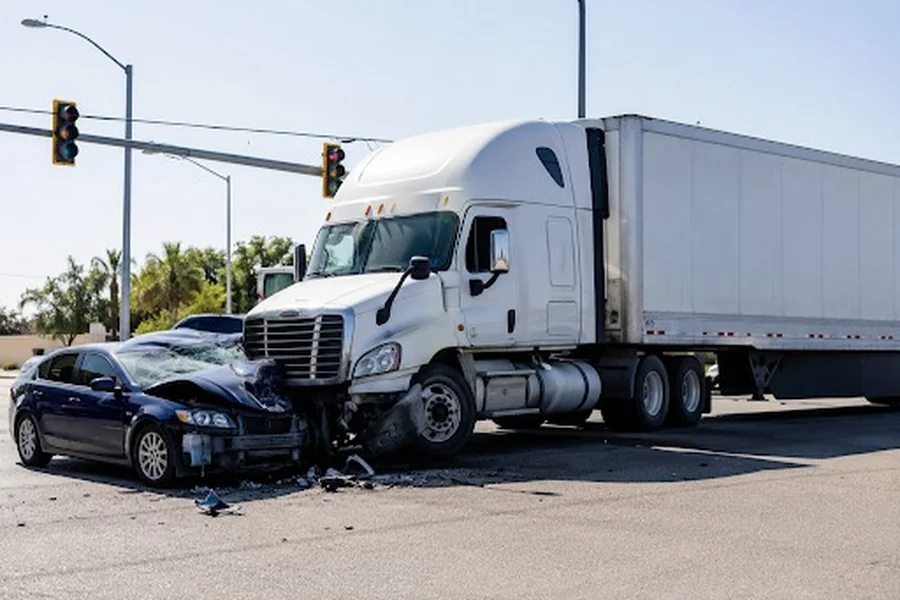
One crash with a big commercial vehicle can transform the life of the individual in several seconds. Crashes which involve left turns receive special consideration since a tractor-trailer might have to move through several lanes of traffic, have a long turning radius and consider the approaches of vehicles in various directions. An error in such a maneuver may leave a passenger automobile that has minimal space to maneuver. The legal problems can be entangled easily. The place of collision, the traffic lights, the marking of lanes, visibility, position of vehicles, driver behavior and policies of those trucking companies can all determine the responsible party. Federal regulations also mandate that commercial motor vehicles should comply with relevant state and local operating regulations, whilst federal safety standards may have some extra standards. To the injured individual, how the accident occurred is not just important. It is the way the available evidence can demonstrate negligence, who is responsible and by what means those losses are the outcome of negligence.
Why Left-Turn Truck Crashes Are Especially Dangerous
A big truck does not maneuver a left turn, as the thinking passenger car. A tractor-trailer is a significantly longer wheelbase, has a larger turning radius and the trailer can be in different motion in comparison to the tractor. The driver should determine the distance and speed of other moving vehicles and place a vehicle that would slightly cover a big part of the intersection. This issue is even more critical when a truck is trying to make a crossing in both directions of a traffic. A motorist might misunderstand an oncoming traffic, get into the crossroad too soon, lose sight of an adequate lookout, or swing over to an adjacent road without noticing another user of the road.
Safety guidelines in the industry also identify the fact that trucks with bigger sizes need more space and time to complete turning maneuvers. Left-turn collisions are capable of resulting in T-bone, head-on, sideswipe and multi-vehicle collisions. Nationwide explains that left-turn collisions often have a high severity impact due to the ability of vehicles involved to hit one another at very high speeds, and more than one road user may be involved.
The Turning Maneuver Can Reveal More Than the Point of Impact
Reconstruction is one of the most crucial components of a truck crash investigation that focuses on an attempt to create a picture of what has occurred before the collisions of the vehicles. The impact point narrates just a part of the story. An attorney might require identifying the location of the truck a few seconds prior, how fast the truck was approaching the intersection, whether or not the turn signal was on, whether the traffic controls were followed, and whether or not the driver had a reasonable view of the oncoming vehicle.
Trailer off-tracking may also take place in a wide-turn collision. The tractor can start moving across an intersection, leaving the trailer to a different path, posing another risk to vehicles alongside or near the truck. Turning radius, lane position, blind areas, inadequate observation and imperfect judgment are recurring issues observed by competitor legal resources in these crashes. That is why photographs depicting only damage of vehicles might not be sufficient. The exercise must look into the overall roadway environment.
Who May Be Responsible for the Collision
Liability depends on the facts and the law of the state where the crash occurred. The truck driver may be responsible if negligent conduct caused the collision, but the investigation should not automatically stop with the driver.
Potentially responsible parties can include:
- The truck driver who failed to yield, failed to maintain a proper lookout, or made an unsafe turn.
- The trucking company if its employee was acting within the scope of employment or if company negligence contributed to the crash.
- A carrier or contractor responsible for vehicle maintenance or safety procedures.
- A manufacturer or maintenance provider when a mechanical defect contributed to the collision.
- Other parties whose conduct contributed to the roadway or traffic conditions.
A commercial truck accident can therefore involve several insurance policies and competing explanations of fault. Some legal authorities specifically emphasize that trucking-company liability can arise when an employee causes a collision while performing job duties. That distinction matters because the insurance coverage associated with a commercial vehicle may differ substantially from an ordinary personal auto policy.
Evidence Can Make or Break a Truck Accident Claim
Strong evidence is often what separates a clear liability case from a disputed one. Trucking cases may contain evidence that is unavailable in ordinary passenger-vehicle collisions.
Important evidence can include:
- Traffic-camera or nearby surveillance footage.
- Dashcam recordings from surrounding vehicles.
- Photographs of vehicle positions, road markings, signs, and the intersection.
- Police reports and crash-scene measurements.
- Statements from independent witnesses.
- Driver qualification and training records.
- Vehicle inspection and maintenance documentation.
- Electronic vehicle information and event data when available.
- Dispatch, delivery, and trip records.
- Applicable trucking logs and operational records.
The timing of an investigation matters. Physical evidence can disappear, vehicles can be repaired, surveillance footage can be overwritten, and memories can become less reliable.
Where a Left-Turn Truck Accident Lawyer Adds Value
If the evidence suggests that a commercial driver caused the collision, speaking with a Left-hand turn truck accident lawyer can help organize the legal and factual issues surrounding the claim. The attorney’s role is not simply to file paperwork. A serious truck case may require coordination with accident reconstruction professionals, medical providers, investigators, and other specialists.
An attorney may examine the driver’s conduct, the company’s role, the condition of the truck, available electronic evidence, insurance coverage, and applicable traffic and trucking rules. The goal is to build a supported explanation of responsibility rather than relying on assumptions about which driver must have been at fault. This becomes particularly important when an insurance carrier disputes liability or argues that the injured person contributed to the collision.
Medical Evidence Should Match the Full Impact of the Crash
Truck collisions can produce injuries that require treatment well beyond the first emergency-room visit. Some people experience fractures, spinal injuries, traumatic brain injuries, soft-tissue damage, or other conditions that affect work and everyday activities. A compensation claim should account for the actual consequences of the injury rather than focusing only on immediate medical bills. Depending on applicable state law and the circumstances of the case, recoverable damages may include medical expenses, future treatment costs, lost wages, diminished earning capacity, property damage, and compensation for pain and suffering.
Future medical needs can be especially important. Someone who requires surgery, rehabilitation, physical therapy, assistive equipment, or long-term care may face expenses that cannot be calculated from the first few weeks of treatment. A well-supported claim connects the medical evidence to the accident and explains how the injuries affect the person’s future.
What to Do After a Commercial Truck Collision
The first priority after any serious crash is safety and appropriate medical care. Once immediate needs are addressed, preserving information can help protect the accuracy of the claim. If you are physically able to do so, document the scene without putting yourself in danger. Photograph visible vehicle damage, roadway markings, traffic signs, the intersection, and relevant surroundings. Keep records of medical appointments, expenses, missed work, and other accident-related losses.
Avoid guessing about fault when speaking with insurers or other parties. A simple statement made before the investigation is complete can later be taken out of context. It is also important not to assume that a police report automatically determines legal liability. A crash report can be valuable evidence, but a personal-injury claim may require a broader investigation into the truck driver, carrier, vehicle, roadway, and available electronic records.
How Truck Crash Claims Differ From Ordinary Car Accident Cases
| Issue | Passenger Vehicle Crash | Commercial Truck Crash |
| Vehicle size | Usually smaller | Large tractor-trailer or commercial vehicle |
| Potential evidence | Police report, photos, witnesses | May also include carrier and vehicle records |
| Insurance | Often personal auto coverage | May involve commercial policies and multiple parties |
| Investigation | Frequently more straightforward | Can involve reconstruction and trucking records |
| Liability | Often focused on individual drivers | Driver, carrier, maintenance, or other parties may be examined |
| Physical damage | Varies | Passenger vehicles can sustain substantial damage in heavy impacts |
It is not just the size of the vehicles that is different. Business trucking activities may produce more documents and legality issues warranting consideration when defining negligence. The federal rules fall under the extensive regulatory framework of commercial motor vehicles. Indicatively, the federal regulations provide the driver of the commercial motor vehicle to operate the vehicle in compliance with the rules and laws in jurisdiction subject to the federal requirements, which might constitute a high level.
Conclusion
A left-turn truck accident may be simple at the surface but it may turn into a big mess after the insurance companies jump in to investigate. Taking a closer look at the physical evidence, driver statements, traffic controls, vehicle data, medical records, and trucking-company documentation might paint an entirely different picture. Facts as opposed to assumptions form the strongest cases. The timely preservation of evidence, meticulous medical record keeping, and a thorough liability investigation may aid in the determination of what, and whom to hold responsible. In case of a collision with a commercial truck, in which case you were seriously injured, early case-specific legal advice may save you valuable evidence and answer your questions. The correct course of action will be contingent upon the facts of the crash, the state law that will be applied and losses you have sustained.