Thinking of Switching to Sustainable Bedding? This is What Actually Makes a Set Worth It
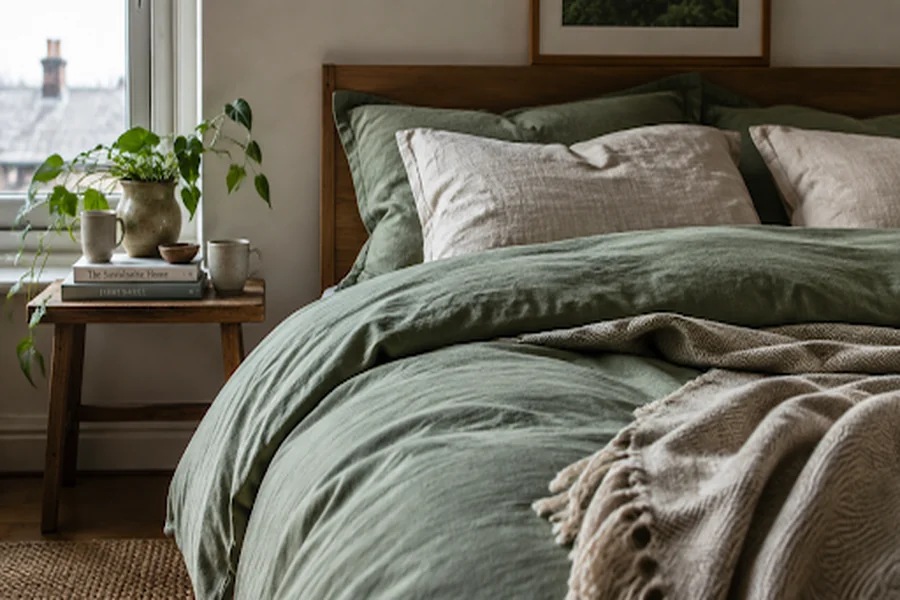
There is a marketing issue of sustainable bedding. There exists too much of it that is marketed on virtue alone as though the eco credentials are intended to redress the balance of a set that is pale, sleeps hot or disintegrates after a year of washing. A bad trade is to use switching as a reason to switch, but switching because of the right reasons. It is good news because you need not make it. Sustainable bedding is not a trade off on comfort, it is just a better bedding that coincidentally is more sustainable to make.
Then just in case you are considering switching, consider a set as you would consider any high-end buy: on the quality of its feel and its durability, and the sustainability as the added feature it ought to be. This is what really counts.
The fibre does most of the work
Begin with the fibre, as it is what determines the rest. It is the bamboo viscose that is worth knowing about. It is delicate, easily less so than cotton of the same count, and feels smooth, fluid, on the skin. It has a structure that is hollow in nature with the fibres being supported by airflow thus it does not hold heat but breathes. It evaporates moisture off of the body. And it is inherently dust mite and bacteria resistant, which is desirable when you sleep lightly, or wake stuffy. None of that is a sustainability assertion. It is merely a good fibre, and it is the reason why the set makes you feel like it is an upgrade the first night you put it on.
Where the eco case actually holds
The sustainability case sits underneath all that, and it is genuine. Cotton is a water-hungry crop, while bamboo grows fast and densely with far less demand on land and irrigation. If you want to check how a brand actually sources its fibre rather than taking the label’s word for it, bodies such as Textile Exchange exist precisely to track that. The point is that with bamboo you are not paying for the eco story with comfort. You get both, which is the whole reason to bother switching.
The weave and the number
The other thing is the weave. Sateen weave provides bedding with a smooth feel and a fitting flow, the aspect that makes a bed look and feel luxurious, as opposed to a clean one. A big portion of the reason a good set is a set you are looking forward to getting into.
Then there is thread count, and here the usual advice is wrong. Higher is not automatically better. Beyond a point, a high count just means a dense, heavy sheet that traps warmth, and since a cooler bed makes for better sleep, that works against you. For bamboo, 400 is the top specification and the right one: substantial and durable without sleeping hot.
Your checklist before you buy
Put those together, and you have your test. The set worth buying states all three plainly: 100% bamboo viscose, a 400 thread count and a sateen weave, and a good example of luxury bamboo bedding will give you exactly that. When a brand names the fibre, the weave and a sensible thread count, it is telling you it has nothing to hide.
The greenest set is the one you keep
The final consideration is the length of the life cycle, which is the aspect of sustainability that is not on marketing yet has the greatest impact. The most environmentally friendly bedding is that which does not need to be changed. Quality bamboo bedding softens on being washed, but does not wear out, and since it regulates to the body temperature instead of working in one direction, one set is all the year through, summer and winter, and there is no need to have a different set during the warm months. Plant a tree once, and use it in years and the sustainability will have taken care of itself. That is the reason why it is worth switching.