Why “Just Right” Can Matter More Than Maximum Specs When Choosing an Electric Dirt Bike
When buying clothes, many of us have learned to pause and ask: Will I actually wear this often? Does it suit the life I have now, or do I only want it because of a passing trend?
That restraint can disappear when we shop for outdoor gear. A bigger battery, more power, and longer range can all feel like safer choices. There is nothing wrong with those features. What matters is whether they reflect the way the product will actually be used.
With a significant purchase such as an electric dirt bike, more does not always mean more suitable. Mindful purchasing is not only about choosing better quality. It also means avoiding performance and features that are unlikely to serve a real, long-term need.
The goal is to find the right balance between the bike’s size, capabilities, and real use.
Separate What You’ll Use Often From What You Might Use Someday
Before comparing bikes, picture an ordinary weekend rather than the most ambitious ride you can imagine.
Where will you usually ride? How long will a typical session last? Will most outings take place on relatively gentle private off-road terrain, or will you regularly encounter hills, loose surfaces, and more varied conditions? How much off-road experience do you already have?
These questions may be less exciting than peak-power figures, but they make it easier to see which specifications are genuinely necessary.
If most rides happen at familiar locations and last only a few hours, you may not need to increase every specification because it could prove useful someday. If you ride frequently, stay out longer, and regularly encounter more demanding terrain, a larger battery or higher-performance setup may have a clear purpose.
The point is to separate everyday needs from occasional possibilities before “just in case” starts shaping the whole purchase.
Top Speed Is a Filter, Not the Answer
Speed is one of the easiest numbers to give too much weight.
When shoppers begin with searches such as electric dirt bike for adults 50 mph, 50 mph naturally becomes an early filter. Meeting that requirement, however, does not tell you whether the bike fits the rider or whether that speed will regularly matter where it is actually used.
Instead of turning “How fast can it go?” into “How much speed do I need?”, put the number back into context. Where will the bike normally be ridden? Does that level of performance suit the rider’s experience? What does the terrain actually call for?
Speed can remain a useful filter, but a higher number should not automatically move a bike higher on the list.
Bigger Is Not Automatically Better When It Comes to Fit
Sizing is a useful reminder that many specifications do not follow a simple “more is better” rule.
Wheel size, seat position, and recommended rider height may attract less attention than power, but they become much more important once someone gets on the bike. When the bike and rider are poorly matched, low-speed maneuvering, stopping, and body positioning can become more difficult.
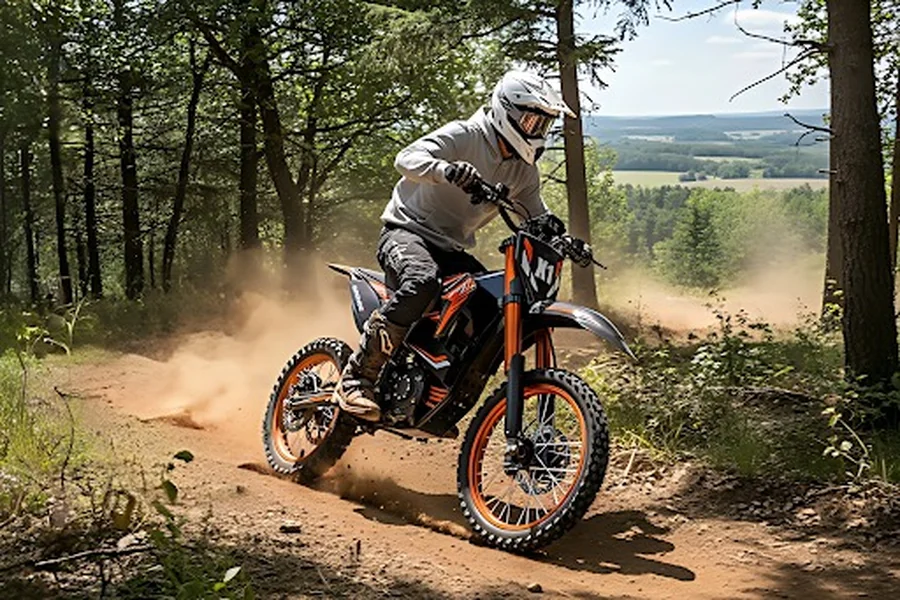
For example, the qronge X1 Spark M, a mini electric dirt bike, uses a 14-inch front wheel and a 12-inch rear wheel and lists a recommended rider height of 4’0″–5’5″. Those details say far more about whether the bike may suit a particular rider than the word “mini” does on its own.
Labels such as “mini,” “adult,” or “high performance” can help with an initial shortlist, but they cannot replace specific sizing information.
Choose Range for an Ordinary Day
Range creates another version of the “more feels safer” mindset.
A larger number can be reassuring, but the more useful questions are how long a normal ride lasts, how large the usual riding area is, and how much range covers most real outings.
The point is not to deliberately choose a smaller battery. It is to find a capacity that meets the majority of actual needs. One unusually long ride that may happen once a year does not necessarily need to determine what you buy for every other weekend.
The same principle applies to other features. If something solves a problem that comes up regularly, it has clear value. If it mainly serves a hypothetical situation that rarely happens, it deserves another look before becoming part of the purchase.
Think About How the Bike Will Be Used Years From Now
The decision to select the correct specifications is just one part of the decision. The other question is whether the bike will be useful in the long run.
Prior to purchasing long-term outdoor gear, it is reasonable to consider whether such items can be serviced by substituting standardized components, the presence of after-sales services, and how regular wear can be fixed with the help of maintenance. Availability of spares and maintenance services will give a bike an enhanced opportunity to remain in service and not to have to be put to premature retirement due to a single component.
Daily care is important, as well. Instructions prescribe charges, proper storage, cleaning when necessary and an eye on visible wear are all factors to influence the usefulness of the bike.
Unless the buying better is accompanied by using longer, conscious consumption may easily cease at the time of buying.
You Don’t Need Every Accessory on Day One
Another type of overbuying can be formed by outdoor hobbies, when a complete list of accessories is bought, before actual use has reached the point of determining what was really needed.
The necessary safety equipment must be prepared in advance. On top of that, we can leave out a lot of stuff and not attend to it until a few rides are completed. That is when it becomes evident what tools are utilised on a regular basis, what sort of storage serves the best and which of the accessories that initially appeared necessary is not used so frequently.
Beginning with the required safety equipment and barebones, then having the actual practice define what is needed next, is more in line with conscious purchasing than purchasing a complete system on the first day.
Buying More Accurately Matters More Than Simply Buying Less
Conscious consumption does not involve necessarily taking the smaller, simpler, or more basic.
Should there be a requirement of an increased battery or more performance due to the real riding requirements, this is a valid requirement. When a specification is required as a measure to ensure safety or physical fit, then there is no need to compromise just to purchase fewer. The idea is to prevent considering rare cases as the factors that all purchases should address.
Those works that remain in a wardrobe tend to be not the most dramatic of works, but the ones that are worn and reworn again. This is similar to outdoor equipment.
To the extent a bike, in its size, performance, and intended use, actually fits the real life, just right is not less. It implies that the product is more likely to be used again and again and be supported by time and become a permanent attribute of the daily life.