What To Do During a Home Plumbing Emergency in 2026: A Room-by-Room Damage Control Guide
Key Takeaways
- Keep people and pets away from standing water, especially near electricity.
- Shut off water at the fixture valve when possible, or use the main shutoff for major leaks.
- Do not continue using plumbing fixtures connected to a suspected blockage or backup.
- Photograph damage and keep notes for repair and insurance purposes.
- Call qualified help for burst pipes, sewage, water heater failures, hidden leaks, and safety hazards.
A burst pipe, overflowing toilet, or water heater leak can turn into major property damage in minutes. The goal is not to diagnose every plumbing issue yourself. It is to protect people, stop the water safely, limit damage, and know when to call an emergency plumber Manasquan & Central NJ for immediate help.
Think rationally and concentrate on the next safer move. Water may move beneath the flooring, through cabinets, and behind walls, and even into ceilings way before the scope of the problem is fully revealed. It is important to save possessions, yet it is crucial to prevent electrical shock, hot water, and polluted waste water.
Why Plumbing Emergencies Need Fast Action
A leak that may appear to be small may soak drywall, insulation, cabinets and subflooring when left hours long. Timely intervention can minimize structural loss, material loss, and clean up requirements. When the water is spreading fast you do not know where to start, or the leak is close to wiring, assume it is an emergency and not a morning affair.
First Five Minutes: A Simple Response Plan
Evacuate children, pets and those who are of limited mobility out of the affected area.
Find outlets, cords, appliances or electrical panels, around the water. Do not get into unsteady standing water.
Turn off the nearest shutoff valve to the sink, toilet, washing machine or water heater in the event there is a leakage confined to the sink, toilet, washing machine or water heater.
Turn to the main water off when water is pouring through an obscured pipe, ceiling, wall, or several sources.
Position buckets under drips that are contained and relocate valuables and seek professional assistance whenever the situation is not safe to contain.
Kitchen Emergencies
Leaking Sink Supply Lines
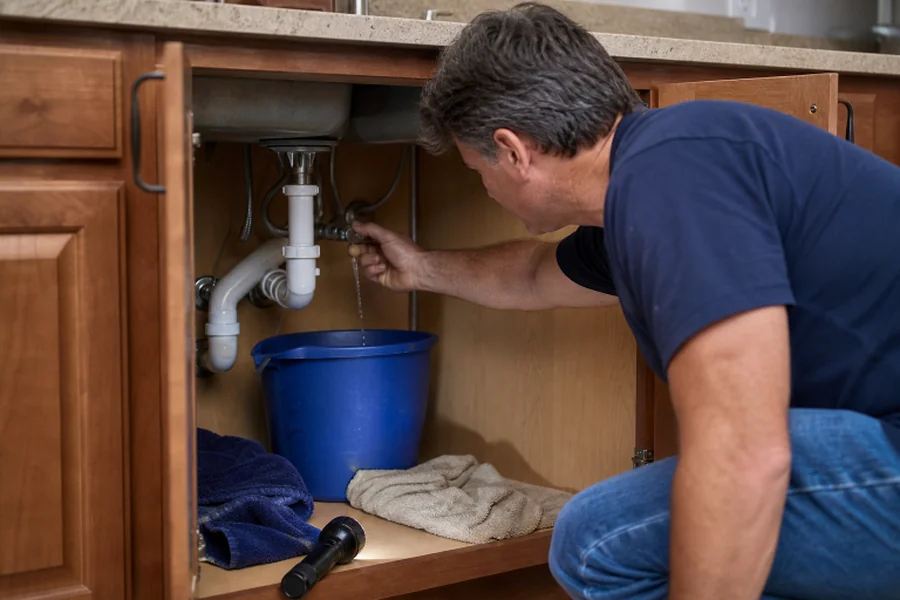
Find the small hot and cold shutoff valves that are usually on the wall or floor at the back of the cabinet, look underneath the sink. Turn the valve right to prevent the flow of water to that fitting. Lift a bucket below the leak, and do not have to reach through water to one of the outlets or appliances. Cabinet back may have a hidden leak by swollen cabinet wood, damp objects, musty odors, or water present.
Dishwasher and Garbage Disposal Leaks
Switch off dishwasher cycle when control is dry and safely reachable. Never put your hand in a garbage disposal, dishwasher outlet or even an outlet when standing in water. Clear objects that might be under the sink and do not run either of the appliances without determining the source.
Bathroom Emergencies
Overflowing Toilets
Do not flush again. Switch off the toilet shut-off valve clockwise (turn towards the right-hand wall) inside the wall behind or beside the toilet. Supposing that the bowl continues to ascend, and it is safe to reach the tank, there may be a way to stop the incoming water by taking off the lid, and raising the flapper closed. When the sewage is already on the floor then it is recommended that people should be kept away and the flow of the sewage should not be allowed to flow to other rooms.
Leaks Around Toilets, Tubs, and Showers
The leak of a seal or drain at the bottom of the toilet, soft flooring, stains on the ceiling beneath a bathroom, loose fixtures, and a musty odor may exhibit a more long-lasting leak. Reduce the utilization of the compromised part until it is evaluated. With repeated usage more water can seep into floors and ceilings.
Basement and Utility Room Problems
Burst Pipes
Emergency of water under bursting is an emergency. Turn off the main supply line when supplying the water to a wall, ceiling or an inaccessible pipe. Move boxes, clothing, electronics, and furniture out of the wet area, but do not enter a flooded basement because of the possibility of electricity being involved.
Water Heater Leaks
When the supply valve of cold water to the unit is accessible, and the floor is dry, shut it off. A tank leaking, popping hoots, rusty water, or water around electric connectors may signify a severe issue. There is no reason to care about the manipulation of gas settings or electrical wiring, as well as the hot discharge pipe unless you are aware of the appropriate safety measure of a particular unit.
Sump Pump Failure
The increase of water in the basement, strange sounds of the pump, or silent pump when it rains heavily may indicate a malfunction. Only dry location check power. Do not reach into water to touch cords, plugs or the actual pump.
Sewer Backups and Contaminated Water
Wastewater is a health hazard that should be handled as such. Isolate people and pets, use no sinks, toilets, showers, dishwashers, and washing machines, and do not use fans that might emit the droplets of contaminated materials. The CDC offers information on how to clean up safely following a disaster, which protective gear to use, and cleanup measures in case of sewage.
When Water and Electricity Meet
There is a high risk of shock when standing water is close to outlets, appliances, extension cords, or breaker panels. Do not get into the area, switch switches, or disconnect equipment when standing in water. In case of sparks, smoke, burning odor, or damaged wiring, evacuate the area, and call emergency services. Ready.gov recommends against touching of wet electrical equipment or electrical equipment that is standing in water.
What to Document Before Help Arrives
- Make wide and close-up shots when it is safe to go to that place.
- Record the date of the onset of the problem and date of water cut-off.
- Enumerate destroyed flooring, drywall, furnishings, appliances, and personal property.
- Store emergency supplies, miscellaneous, and temporary shelter receipts.
What Not to Do During a Plumbing Emergency
- Do not continue using fixtures attached to the damaged pipe or drain.
- Should not be used in a completely blocked drain or sewer overflow.
- Do not cut walls or ceilings unless directed by the professionals.
- Do not think a slow leak can cease being damaging.
- Do not take electrical equipment into flooded places.
How to Decide If the Problem Is an Emergency
Ask 3 questions: Does water actively spread? Does it have a health or safety risk, e.g. sewage, electric, gas smell or very hot water? Will waiting do a lot of harm? When answering any question with yes, it is best to cut off the water in case it is not dangerous and find immediate help.
Build a Home Plumbing Emergency Kit
Have an adjustable wrench, slip-joint pliers, a bucket, old towels, waterproof gloves, a flashlight with batteries, plumber tape, and print-up emergency contacts in one convenient place. Name the main shutoff and the main fixture valves to be able to find them by everyone in the house.
Preventive Steps for 2026
Check bare supply lines, replace broken appliance hoses, exercise shutoff valves and store basement storage off floor. Water heaters, washing machines, sump pumps and kitchen cabinets can have leak sensors that give a warning of a small leak before it leads to a significant loss.
FAQs
Is the Main Water Supply to be Turned Off?
No. A small, isolated leak will require a fixture valve. When the source is concealed, water will not cease flowing, or when a number of fixtures is involved. Turn off the main supply.
Should You Turn off the Water Heater?
It can be required to be turned off, in case it is leaking, or the water supply to the house is off. Each way requires different approaches, and thus, safety and expert advice are to be prioritized.
Is it possible to repair a bust pipe by a homeowner?
A leak can be slowed with a temporary clamp, but is not a long-term solution. Problems with burst, concealed or contaminated water require professional consideration.
Conclusion
An emergency situation in the case of plumbing is less complex to cope with, and you only need to follow a simple rule: protect, reduce water damage, eliminate electrical and sewage hazards, document and seek qualified assistance, and respond to an emergency.